 | ||||||||||||||||||||||||||||||||||||||||||
OCTOBER 2026 • ISSUE 2 | ||||||||||||||||||||||||||||||||||||||||||
Wealth building Stay On Track with a Money Strategy That Fits You | ||||||||||||||||||||||||||||||||||||||||||
Hi there, | ||||||||||||||||||||||||||||||||||||||||||
As the calendar flips to October, it’s time for spooky… no, no, none of that. I’ll spare you the Halloween puns and #PumpkinSpiceLatte references. | ||||||||||||||||||||||||||||||||||||||||||
This month in On Track, we’re tackling topics that came up frequently in the survey: wealth-building strategies, passive income, and getting more out of your investments while staying within your comfort zone. More than 40% of survey respondents expressed interest in wealth-building strategies, and nearly a third wanted to learn more about passive income. Let’s get into it. | ||||||||||||||||||||||||||||||||||||||||||
Before dumping a large portion of your portfolio into a high-risk leveraged ETF, one of the first things you can do is honestly gauge your appetite for risk. It’s easy to feel adventurous when markets are going up. How would you feel, and what would you do, if your investments took a substantial tumble? | ||||||||||||||||||||||||||||||||||||||||||
I’m providing links to two questionnaires to help you explore that. The Grable–Lytton Investment Risk Tolerance Assessment is a free, 13-question quiz developed by university researchers and empirically tested. It focuses on your willingness to take financial risk. The Vanguard Investor Questionnaire takes a broader approach, considering your goals, investing experience, time horizon, and financial situation to suggest a mix of stocks, bonds, and cash. Neither is a final answer, but both are useful starting points. | ||||||||||||||||||||||||||||||||||||||||||
Knowing your risk tolerance is a great start. Something else to consider is how much risk you can actually afford to take, along with your time horizon, lifestyle, and retirement goals. If you have a high risk tolerance and 30 years until retirement, your investment mix may look very different from someone who is five years away and loses sleep over market swings. And even an adventurous investor probably shouldn’t put next year’s house down payment at the mercy of the stock market. | ||||||||||||||||||||||||||||||||||||||||||
For a long time, a mix of 60% stocks and 40% bonds has been a familiar starting point. But it isn’t a universal prescription. Many federal workers and former federal workers have access to pensions, which can change how much they need to rely on their investments for retirement income. If a pension covers much of your essential spending, you may have more room to take investment risk. Whether you want to, and whether you need to, is another question. | ||||||||||||||||||||||||||||||||||||||||||
Which brings us to a question I hear often: “How can I make my money work harder for me?” | ||||||||||||||||||||||||||||||||||||||||||
The answer depends on your goals, risk tolerance, and the effort you’re interested in putting in. Some approaches require very little attention. Others, like managing a rental property or running an options strategy, can become something closer to a part-time job. “Passive income” sometimes does a lot of heavy lifting. | ||||||||||||||||||||||||||||||||||||||||||
I’ve compiled a table of possible places to put your money to work, from high-yield savings accounts and Treasuries to stock funds, rental property, and the options wheel. Use it alongside your questionnaire results to explore the tradeoffs, rather than as a shopping list. A bigger payout doesn’t necessarily mean a better return, and low effort doesn’t necessarily mean low risk. | ||||||||||||||||||||||||||||||||||||||||||
Obligatory disclaimer: the table is an educational overview of some available options, and not personalized financial advice. | ||||||||||||||||||||||||||||||||||||||||||
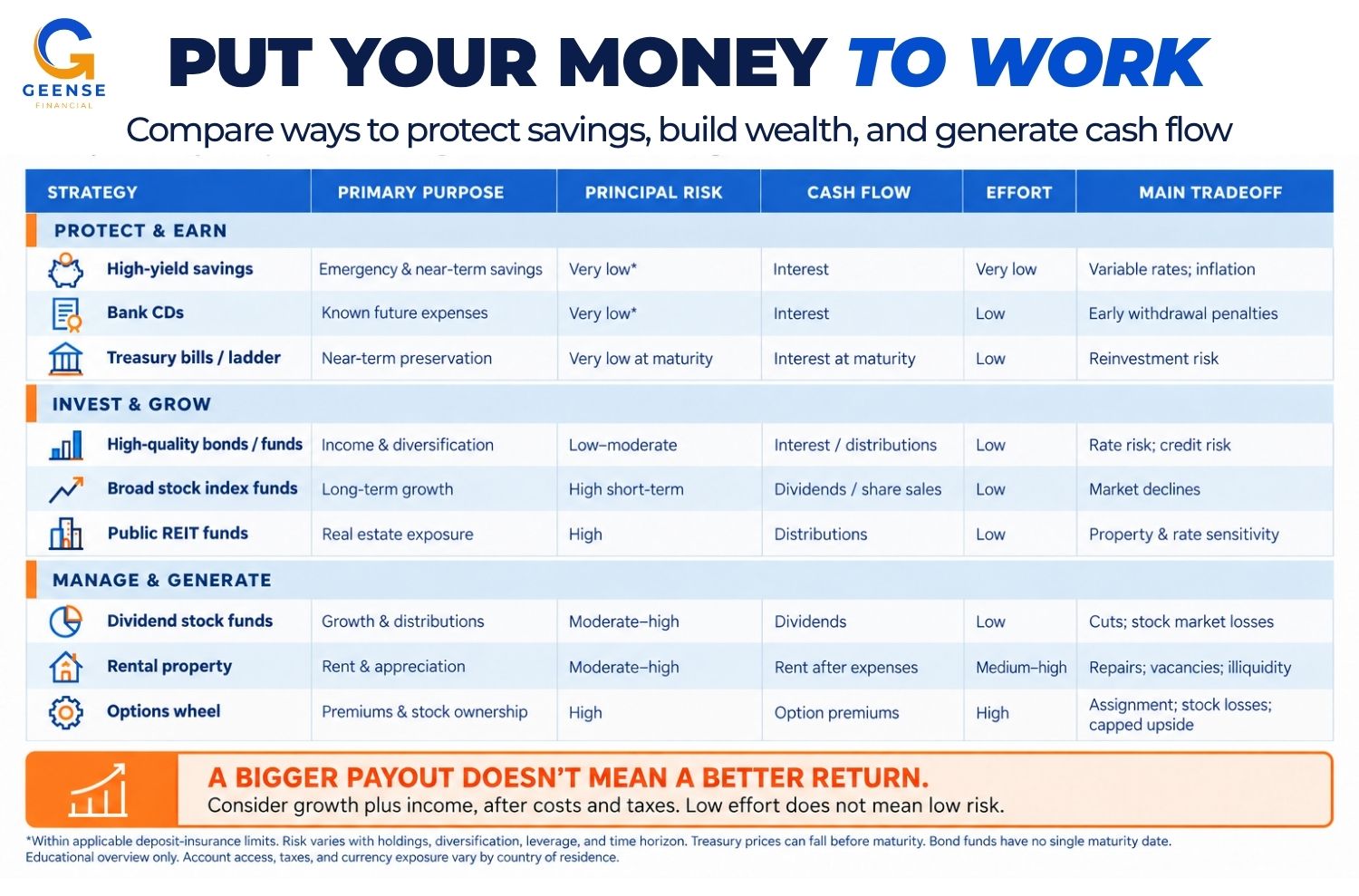 Tap the chart to view the full-size guide.
| ||||||||||||||||||||||||||||||||||||||||||
From the headlines Instead of Ending Humanity, Can't AI Just End a Few of My Subscriptions? | ||||||||||||||||||||||||||||||||||||||||||
AI is everywhere these days whether we want to escape it or embrace it. Specifically for my pivot into financial services, it’s concerning to see that more Americans are turning to AI for financial advice and even to actually manage their own finances. Meta’s AI assistant “Muse” is being branded as a personal finance assistant that you can give access to your bank accounts. That’s gonna be a no from me. But I can see the appeal, especially if there’s a tangible benefit in the form of a recommendation to cancel a long-forgotten subscription or move some cash to a higher interest rate at another bank. | ||||||||||||||||||||||||||||||||||||||||||
In defense of financial advisors, I’d still stake our claim to helping with the emotional aspect of managing money as well as a holistic understanding of someone’s financial picture along with goals and dreams for the future. But I’ll admit that I, myself, have used AI to help parse U.S. tax code and understand the potential risks and returns of an investment. My guiding sense on all of this is that AI is another opinion - a single data point - that can be taken into consideration and should not be thought of as the final arbiter for your financial future. That’s your job! And your financial planner’s, too, if you choose to work with one. | ||||||||||||||||||||||||||||||||||||||||||
Here’s a use-case that I recently revisited for this issue of On Track. In March, I asked ChatGPT for Fidelity equivalents of several Vanguard ETFs. The results were laughably unreliable: questionable tickers, incorrect fund names, and mutual funds described as ETFs. The red text highlights some of the problematic entries. | ||||||||||||||||||||||||||||||||||||||||||
| ||||||||||||||||||||||||||||||||||||||||||
| ||||||||||||||||||||||||||||||||||||||||||
However, I asked again in October and the results were much improved. This time, the answer distinguished between close matches and similar strategies, and acknowledged where there was no direct equivalent. Several of the Fidelity options are mutual funds rather than ETFs. | ||||||||||||||||||||||||||||||||||||||||||
| ||||||||||||||||||||||||||||||||||||||||||
| ||||||||||||||||||||||||||||||||||||||||||
This was but one small experiment, and AI was able to improve its results. Does that mean we trust it with access to bank accounts and investment management? Not on your life. BUT, there is absolutely a role for AI to augment the work of financial advisors and provide clarifying information for investors like you. The answer still needs checking against reliable sources. Just be kind in your questions and reprimands if it’s wrong. We wouldn’t want to start an uprising, now would we?? | ||||||||||||||||||||||||||||||||||||||||||
| ||||||||||||||||||||||||||||||||||||||||||
The fun stuff Because money isn’t everything | ||||||||||||||||||||||||||||||||||||||||||
Not your imagination or nostalgia - the chocolate bars really were bigger! A Mars bar dating back to 1991 makes an appearance alongside its modern counterpart. A little shrinkflation nostalgia, although I wouldn’t recommend a taste test. Watch the comparison. | ||||||||||||||||||||||||||||||||||||||||||
An account for your kids you might not know about Ok, maybe this is more of an FYI: Treasury announced on October 1 that automatic enrollment for Trump Accounts is complete. Eligible children under 18 with a valid Social Security number now have an account ready to be claimed. A parent or guardian still needs to claim it before managing the account or allowing contributions. It’s fair to have questions about any USG auto-enroll program, especially while the rules continue to develop. However, getting children started with long-term investing has its benefits. There are many ways to tackle that goal, and a Trump Account may or may not be right for your family. Fidelity has a useful overview. | ||||||||||||||||||||||||||||||||||||||||||
How much money is actually enough? If money woes have you down because of the economy, your job, your job search, or any number of other reasons, this episode of This Is Uncomfortable is worth a listen. It explores how much money is actually enough, including the story of a woman who has stepped away from using money. That may not be the plan for most of us, but it’s an interesting way to challenge our assumptions. Listen to the episode. | ||||||||||||||||||||||||||||||||||||||||||
| ||||||||||||||||||||||||||||||||||||||||||
Until next time, Jon | ||||||||||||||||||||||||||||||||||||||||||
|
Geense Financial Financial clarity for lives in motion. This email is for educational purposes only and does not constitute individualized financial, investment, tax, or legal advice. Geense Financial is not currently providing investment advisory services. Visit geensefinancial.com/newsletter to read past issues or join the list. |